How FX Trading Strategies Are Being Tailored for Colombia’s Volatile Political Cycles

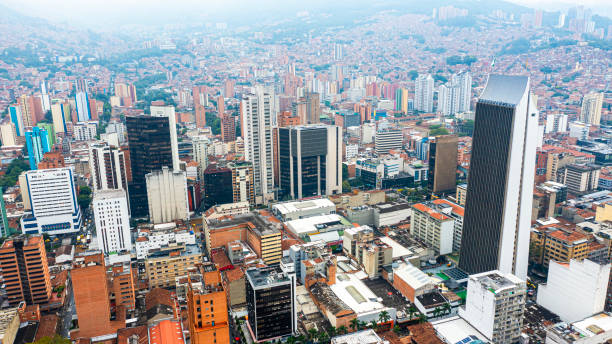
    Cases of political transition in Colombia are normally accompanied with a wave of uncertainty which tends to influence local sentiment and market behavior. When elections near or when big policy changes are announced, the investors and the businesses are met with the shock and confusion they bring. The local currency especially becomes a gauge of how the financial community perceives changes in leadership and governance. These volatile times are not brand new, however, the way market players undertake to deal with them is shifting.

    Colombian traders, economists or even institutional consultants are paying a much closer consideration to how politics and currency motion correlate with one another. Political cycles usually create uncertainty about economic systems, regulatory changes and state expenditures. Consequently, they have a direct impact on the confidence of investors and, by extension, exchange rates. Such events are associated with uncertainty which may cause quick and even steep fluctuations in the value of the peso. To be ready against these swings becomes not a luxury but a must to those who have financial exposure in the Colombian market.

    These realities are becoming increasingly influential on FX trading. There are traders who have started constructing policies that involve not only economic indicators but also the timing and rhetoric of political campaigns. Instead of responding to each and every announcement or speech, seasoned participants would prepare strategies taking into consideration various eventualities. Others establish hedges before elections. Others wait and pay attention to technical indicators that coincide with political landmarks. It is meant to not get reactive, but be ready without having been surprised.

    These plans are very different, and are largely dependent upon a time-oriented view of the trader and their risk aversion. Short-term traders can seek intraday swings caused by headline-driven volatility. Long term players are more susceptible to pay more attention to the macroeconomic positioning as well as how results of various policies may influence exchange rates in months to come. They are united by the fact that they both want stability in times that are inherently chaotic. Trading FX with the help of discipline can be a means of dealing with this kind of uncertainty in a more confident way.

    The emergence of local education in Colombia that focuses on trading and macroeconomics has contributed to the strengthening of this trend. The impact that the political shifts have on the financial markets are analyzed quite frequently on online courses, webinars, and community forums. Traders have been mastering the art of not only reading charts, but also interpreting policy speeches, legislative agendas as well as fiscal plans. The combination of financial and political literacy is able to develop more enlightened plans that can extend beyond taking action on the face of it.

    It has also been facilitated by access to superior trading tools. Traders can easily act swiftly and decisively on platforms that deliver real-time news, international stock market information and can support custom notifications. Most of these platforms are not only available to institutions, individuals can also use them and even small-scale traders are able to use them in a more strategic way. The times of dealing in solitude or in a vacuum are fading in favour of a more connected, more informed and more strategic landscape.

    By adapting FX trading strategy to the peculiarities of the political environment in Colombia, traders are turning disadvantage into opportunity. Political instability seems to be in the picture, but it should not be an excuse of fear or confusion anymore. By preparing, the market players will be able to identify patterns within market noise and will be able to make decisions out of logic and awareness. This development marks not only an involvement in greater sophistication in trading but also a greater consciousness on the realities that determine the future of Colombia.

    Categories: Blog

    What Day Traders Should Know About EUR/USD Microstructure

    Many traders spend hours studying charts, indicators, and news headlines, but few take the time to understand the inner workings of the market itself. That’s where microstructure comes in. It’s not just about price, it’s about how price is formed, who’s moving it, and why. For those active in EUR/USD trading, especially at the intraday level, understanding microstructure can reveal key insights hidden behind the candles.

    Liquidity and the Role of Market Participants

    EUR/USD is the most liquid currency pair in the world, and with good reason. It connects two major economic zones and trades around the clock. But liquidity is not a static number—it changes throughout the day depending on who’s active. During the London and New York sessions, liquidity surges as banks, institutions, and high-frequency traders engage the market.

    Understanding who is behind the volume helps you interpret price behavior. When large players are active, spreads are tighter and fills are cleaner. During quieter sessions, retail traders dominate and slippage becomes more likely. For those managing quick positions, this knowledge is essential for making more accurate decisions in EUR/USD trading.

    Order Flow Shapes Short-Term Direction

    Order flow is the fuel behind price movement. It reflects the ongoing battle between buyers and sellers. Market orders lift price, while limit orders create temporary barriers. Watching price action around obvious levels such as round numbers or previous highs can reveal where liquidity is hiding and how large participants are likely behaving.

    If price is consolidating just under a round number, there is a good chance that stop orders are stacked above it. A quick spike through the level may indicate a liquidity grab, not a genuine breakout. This type of trap is common in EUR/USD trading, particularly during economic releases or session overlaps. Recognizing the intent behind movement helps day traders avoid false signals.

    Timing Is Critical in Short-Term Trading

    Not all times of day are created equal. Microstructure shifts dramatically depending on the clock. The open of London, the overlap with New York, and the final hour of U.S. trading each bring a distinct tone. Volume spikes, spreads adjust, and price behaves differently. Trading during these times without recognizing their characteristics can lead to confusion and poor execution.

    For example, during the London open, price may move aggressively as European banks place orders. That same move may stall during the midday lull. For consistent results in EUR/USD trading, you need to adapt your strategy based on the timing and flow of liquidity.

    The Importance of Execution Tools

    Retail traders often underestimate how much execution quality affects performance. Slippage, order delay, and platform responsiveness can significantly alter outcomes, especially in fast-moving markets. Choosing a broker with reliable infrastructure and low-latency execution is more than a technical choice, it’s part of your edge.

    Many professional traders use tools like depth-of-market displays, volume profiles, and order book visualizers to better understand microstructure in real time. These tools are not just for scalpers. Even short-term swing traders in EUR/USD trading can benefit from seeing how liquidity is positioned and where large orders might trigger reactions.

    Building an Edge Through Awareness

    Microstructure is not about predicting the future. It’s about reading the present more accurately. When you understand how price forms, who is trading, and where orders are likely placed, your trades become more informed and deliberate. It reduces randomness and builds trust in your decisions.

    In the context of EUR/USD trading, where noise can overwhelm strategy, knowledge of microstructure is like flipping on a light switch. It reveals details that others ignore and allows you to navigate with greater precision.

    Categories: Blog

    Mastering the Art of Swing Trading in Global Index Markets

    Swing trading has become one of the most popular strategies for traders seeking to benefit from short- to medium-term movements in financial markets. When it comes to indices trading, swing strategies offer several unique advantages. Unlike day trading, which requires constant screen time, swing trading provides the flexibility to analyze setups at the end of the day and hold positions for several days or weeks. This makes it a preferred choice for those who cannot be full-time traders but still want to engage actively in the markets.

    Why Global Indices Are Ideal for Swing Traders

    Global indices like the S&P 500, FTSE 100, DAX 40, and Nikkei 225 offer deep liquidity, consistent price movement, and broad exposure to economic sectors. These characteristics make them ideal instruments for swing trading. The diversification within indices helps smooth out volatility compared to trading individual stocks.

    Indices also tend to respect technical levels better than single stocks, largely because they reflect the collective movement of a wide group of companies. This makes chart analysis more reliable for swing traders who depend on key support and resistance levels.

    Key Indicators That Help Identify Setups

    Successful swing trading relies on accurate identification of entry and exit points. Traders commonly use tools such as moving averages to determine trend direction, and oscillators like RSI and MACD to spot overbought or oversold conditions. Fibonacci retracements and trendlines are also widely used to forecast pullbacks and continuations.

    For instance, a trader might use the 20-day and 50-day moving averages to spot trend confirmation, and then use RSI to look for divergence as a signal for entry or exit. Timeframes like the 4-hour and daily charts tend to be the most effective for swing setups.

    Position Sizing and Risk Management

    Even the most accurate setup can fail without proper risk management. Swing traders must carefully determine position size based on the size of their Indices trading account and their risk tolerance. A good rule of thumb is to risk no more than 1 to 2 percent of total capital on any single trade.

    Setting stop-loss orders is crucial. Traders often place stops just beyond a key support or resistance zone. Trailing stops can also be used to lock in profits as a trade moves in the desired direction.

    Global Economic Events That Shape Indices

    One key challenge in swing trading global indices is staying informed about macroeconomic news. Indices are sensitive to data releases like employment numbers, inflation rates, GDP growth, and central bank policy announcements. Traders should maintain an economic calendar and be prepared for increased volatility during major news events.

    It’s also essential to understand the relationship between different indices. For example, a sharp move in the US indices can influence Asian and European markets the following day. Correlations should not be ignored when holding trades across multiple indices.

    Emotional Discipline and Trade Review

    Swing trading may seem easier than day trading, but it still demands emotional discipline. Traders must resist the urge to interfere with a trade based on temporary price movement. Journaling each trade and conducting regular performance reviews can help reinforce discipline and uncover areas for improvement.

    Over time, successful swing traders develop a system that works best for them, a combination of technical tools, timeframes, and risk parameters. Backtesting and demo trading can help fine-tune this system before applying it in real markets.

    Swing trading in global index markets offers flexibility, structure, and a strategic approach for capturing price movement over several days or weeks. With the right combination of analysis, discipline, and market awareness, traders can take advantage of the consistent trends and liquidity that indices provide. As long as risk is managed and emotions are kept in check, swing trading can be a powerful strategy in any trader’s playbook in Indices trading.

    Categories: Blog

    The Rising Influence of Renewable Energy on Oil Markets

    Global energy systems are undergoing a fundamental transformation. The shift toward renewable sources such as solar, wind, and hydroelectric power is no longer theoretical, it is happening in real time. This movement is not only changing how energy is produced, but it is also having a noticeable impact on traditional fossil fuel markets, especially oil. For those active in commodities trading, understanding this evolving relationship has become critical.

    Shifting Demand Patterns Challenge Oil Dominance

    Oil has long been the cornerstone of global energy consumption. From transportation to manufacturing, its use has been deeply embedded in economic systems. However, the rising adoption of electric vehicles and renewable power generation is beginning to chip away at oil’s dominant position.

    In countries leading the green energy transition, such as Norway and China, oil demand for transportation has already started to decline. Electric vehicles do not require gasoline or diesel, and as battery technology improves, adoption rates are accelerating. In commodities trading, this slow but steady erosion of demand creates new dynamics in oil price forecasting.

    Renewable Investment Alters Market Sentiment

    Major economies are investing heavily in renewable infrastructure. Wind farms, solar fields, and energy storage systems are receiving government support and private capital. These investments influence expectations about long-term energy use, and those expectations shape oil futures pricing.

    When traders believe oil demand will plateau or fall, long-term contracts often reflect lower price growth. This sentiment can dampen rallies, even when short-term supply issues emerge. Professionals in commodities trading pay close attention to energy policy announcements, clean energy targets, and infrastructure spending bills as signals of how sentiment is shifting.

    Geopolitics Reframed by Energy Independence

    One of the most significant effects of renewable energy growth is the change in geopolitical dynamics. Nations that once relied heavily on imported oil are now reducing that dependency through domestic solar or wind projects. This reduces vulnerability to oil price shocks and supply disruptions.

    As energy independence grows, the strategic importance of oil exporters may diminish. This shift can change trading patterns, affect regional power balances, and even alter how conflicts over energy resources unfold. For traders in commodities trading, these long-term trends matter just as much as near-term fluctuations.

    Oil Producers Adapt to a Changing Landscape

    Traditional oil-producing nations are not ignoring these developments. Many are beginning to diversify their economies or invest in renewable energy themselves. Saudi Arabia, for instance, has launched ambitious initiatives to reduce its reliance on oil revenue. These moves suggest that even the strongest players in the oil market recognize the need to evolve.

    This adaptation process adds complexity to oil pricing. Markets now factor in not just physical supply and demand, but also strategic planning by producers. In commodities trading, this complexity offers both risks and opportunities depending on how well a trader can interpret multi-layered signals.

    Coexistence, Not Elimination

    Despite the rise of renewables, oil is not disappearing any time soon. It still plays a major role in industries that have few alternatives, such as aviation and petrochemicals. The key insight is that oil’s role is being redefined rather than eliminated.

    The coexistence of fossil fuels and renewables creates a dual-track market where traditional energy sources remain essential, but their pricing power is increasingly influenced by the pace of clean energy adoption. Traders involved in commodities trading must navigate this overlap carefully, using a broader set of data points to inform their positions.

    Understanding how renewables shape oil markets is not just about forecasting demand. It is about understanding how a global transition shifts perception, strategy, and capital allocation.

    Categories: Blog

    A Beginner’s Guide to Demo Accounts in Arabic Forex Platforms

    Entering the forex world can feel overwhelming at first, especially if English is not your primary language. For Arabic speakers just beginning to explore FX trading online, demo accounts offer the safest and smartest way to start. These accounts allow you to practice trading in real market conditions without risking any money.

    Learning by Doing Without the Pressure

    A demo account simulates the real forex market. You can place trades, test strategies, and get used to the platform’s features using virtual funds. This gives you the freedom to make mistakes, learn from them, and improve your skills with zero financial risk.

    The experience is hands-on and much more valuable than reading guides alone. You learn how to manage entries, exits, stop-loss orders, and market volatility, all of which are essential when transitioning to live FX trading online.

    Top Arabic Platforms Offering Practice Accounts

    Many brokers now cater specifically to the Arabic-speaking market. They offer user-friendly demo accounts and localized platforms to make learning easier.

    Some of the most accessible include:

    • XM – Offers an Arabic interface, regional webinars, and practice accounts with flexible balances
    • Exness – Arabic support and a fast, responsive demo environment ideal for testing real-time strategies
    • AvaTrade – Educational tools in Arabic plus smooth mobile access for beginners
    • FXTM – Strong focus on education with clear walkthroughs in Arabic
    • IC Markets – Known for accurate demo simulations and compatibility with MetaTrader in Arabic

    Each of these brokers gives Arab traders the chance to become familiar with FX trading online in a low-stress setting.

    Skills You Can Build Before Going Live

    A demo account is not just a sandbox. It’s your first trading classroom. Some of the most important skills you can develop include:

    • Reading candlestick patterns and market charts
    • Understanding currency pair behavior
    • Placing stop-loss and take-profit levels effectively
    • Learning how news events affect price movement
    • Practicing risk management with position sizing

    These habits form the core of your trading identity and are much easier to build in a practice environment.

    Avoiding Emotional Traps in Early Trades

    Even though demo trading uses fake money, the emotional element is still present. You may feel the excitement of a big win or the frustration of a loss. Use this to your advantage. Practice managing your reactions. When you later move to real capital, you will already have some control over emotions, a key factor in succeeding with FX trading online.

    Moving On When You Are Ready

    There is no fixed time limit for staying on a demo account. Some traders practice for weeks. Others stay for months. The right time to move on is when you feel confident making decisions without hesitation. Your trades should be based on strategy, not guesswork.

    Before going live, review your performance in the demo account. Did your strategies produce consistent results? Were your losses manageable? Did you respect your stop-loss levels? These answers will guide your next step.

    Starting with a demo account is not a shortcut, it is a commitment to learning. For Arabic speakers who want to master FX trading online, this first step offers clarity, confidence, and real experience. Take your time with it, and you’ll be far more prepared when real money is on the line.

    Categories: Blog

    How Greek Traders Are Combining Forex and Precious Metals Trading Strategies

    Sleepless nights and mornings have become the norm among many Greek traders as they watch currency charts and commodity prices on laptops and phones. The financial marketplace does not seem so remote or institutional anymore. Individual traders are combining skill, instinct and technology to make their own strategy in Greece. Opportunity is now being discovered by an increasing number, in bringing together two fields that have long been separated, foreign exchange trading and the precious metals market.

    What is appealing is the contrast. Forex trading, also known as currency trading, is highly volatile and fast-paced. It reacts immediately to political news, rate decisions or economic news. Conversely, precious metals such as gold and silver are more likely to move with the bigger global trends, and can often respond to fears of inflation, or geopolitical tension. To the Greek trader with knowledge of how currencies move, a better-rounded and more informed trade may be achieved by combining forex strategies with commodity exposure.

    Others begin their day by monitoring the euro-dollar exchange rate, looking out to see if there is any trend that indicates that a trade is worth taking. The very same traders usually have a second screen open to keep an eye on the price of gold as they are aware that a declining euro could, on occasion, indicate an upsurge in metal prices. Such observation is already becoming instinctive to those traders who already understand how different markets interact. And it is not enough to guess the price direction but the causes of movement.

    This is the new environment where precious metals trading has assumed a new dimension. Hedging against inflation or a store of value in the future is no longer the case to many Greeks. It forms part of a live interactive strategy which is responsive to the signals in the forex market. The change of dollar strength can result in an adjustment of a gold position. A silver trade could occur because of a euro rally. They are not rushed decisions, and in most cases, they might be arrived at after considering the technical indicators and the big economic-related scenario.

    It has a steep learning curve, and the available tools are as good as never before. The online providers provide real time information, analysis software as well as tutorials specific to both forex and metals. Greek traders particularly those of the younger generation are utilizing the resources to acquire skills and confidence. They discuss approaches in the forums, experiment with demo accounts, and gradually develop a methodology that fits their personal objectives. It is no longer a case of either one market or the other. It is about understanding their relationship.

    Other traders talk about the fulfillment they feel after figuring out world events and transforming that knowledge into trade. An unexpected move by one of the central banks in Asia could initially cause a currency pair to shift with spillover effects in gold markets several hours later. It is satisfying to notice that chain reaction and to be able to position accordingly. It also reinstates the idea that one can still be financially successful even when not located in a big financial center.
    When used in combination with active forex strategies, precious metals trading can give Greek traders an exclusive advantage. It enables them to decrease their exposure at a time when there is uncertainty and also helps them remain active in dynamic markets. This two sided interest promotes a more deliberate and knowledgeable look. What used to be distinct feels linked to one another. Greek traders are sailing through risk and reward to demonstrate how ancient and modern market wisdom can be stitched into something vibrant and highly individual.

    Categories: Blog

    How MetaTrader 5 Helps Portuguese Traders Respond to EU Economic Data Releases

    All traders realize that the release of economic data has the power to influence the markets. Those handling trade activities in Portugal are affected by the regular updates on EU inflation and employment rates. Being prompt and sensible in handling each release may mean the difference between profit and loss for traders. That’s why many Portuguese traders depend on MetaTrader 5 as a necessary tool while dealing with frequent EU economic updates.

    If the European Central Bank announces, releases GDP results, or shares inflation data, EUR/USD or EUR/GBP pairs can go higher or lower very fast. Traders in Portugal are hugely influenced by these events because of their relation with the euro. To be able to respond that quickly, you need a proper platform. Since the market changes so rapidly, MT5 allows users to monitor, assess and react to those changes within the shortest amount of time.

    The economic calendar that comes with the platform is one of the appreciated aspects. It notifies traders about events scheduled soon, giving the expected time and information on both data and its potential market impact. You won’t have to move back and forth between websites or wait since everything you need is in the trading terminal. This handy information allows Portuguese traders to be ready beforehand and act appropriately once they see the data.

    Charting functions are valuable, since they allow you to track the market in real time and spot its reactions instantly. A sudden increase in EUR/USD after a strong PMI in the eurozone can be analyzed with MT5’s advanced charts to let the trader respond with greater certainty. Technical indicators make it possible to reinforce decisions that could be based on instinct or delays in decision-making.

    Advanced Portuguese traders can use MetaTrader 5 for help with automating their actions. Using pending orders and scripts, traders can capitalize on price movements triggered by economic news releases, letting the computer monitor it for them. Being prepared and using automation have become a great choice, mainly for traders who trade part-time or with many different assets.

    The platform offers special tools that let traders check the reactions of the market and placed orders just after news is released. When there are unexpected changes in EU data, Portuguese traders are able to interpret them more effectively. It works best at times of turmoil, since spreads could widen and orders might execute differently than expected. When such conditions are closely monitored, they can plan their openings and closings with better control.

    MetaTrader 5 is capable of more than just aiming at opportunities as they come up. Traders can analyze activities after the event has finished. When a big economic report is released affecting Portugal, traders have the chance to see how the market reacted, assess which patterns were most helpful, and if the predictions turned out as expected. This way, what worked or failed informs the strategy for the next release.

    Traders working with Portuguese firms in the eurozone realize that watching economic figures helps them direct their trading activities. Having the proper equipment allows a trader to react more confidently than in the past. This platform provides the right support for speed, information, and ease of use in today’s trading market. Where EU data influences a lot of the business world, a platform that enables quick and clear decision-making is absolutely essential.

    Categories: Blog

    The Role of Messaging Discipline in Volatile Public Debates

    In moments of public tension, it’s easy for organisations to feel pulled in multiple directions. Competing demands from media, stakeholders, internal teams, and community voices can quickly overwhelm even the most experienced leadership. In this environment, messaging discipline is not just helpful it’s essential.

    Volatile public debates move fast. Narratives form quickly, positions harden, and misinformation spreads. An inconsistent or unclear message can create confusion and doubt. Even worse, it can suggest that the organisation lacks control or has something to hide. The way a message is delivered matters as much as its content.

    Maintaining discipline does not mean repeating the same line over and over. It means knowing exactly what the organisation stands for, what it will and won’t say, and how each message supports its broader objectives. A well-structured message provides focus in uncertain times. It sets the tone, keeps teams aligned, and prevents avoidable damage.

    This is where an advocacy and issues management firm offers crucial support. These firms work closely with clients to map the risks, identify pressure points, and craft messages that hold steady even when questions come fast. They understand how debates unfold who influences them, what language escalates tension, and how to stay consistent under pressure.

    In high-stakes debates, especially those involving regulation, public health, or education, the temptation to react emotionally is strong. Leaders may feel the need to respond quickly to criticism or shift tone based on social media trends. But every shift adds noise. Messaging that is reactive rather than strategic often creates new problems.

    Internally, a lack of discipline leads to confusion. Staff may not know what to say, how to answer questions, or what the organisation’s position actually is. This creates risk not only in media but in daily interactions with customers, partners, and regulators. A clear messaging framework helps avoid this by giving everyone the same foundation.

    Externally, discipline helps build credibility. When an organisation speaks with consistency across channels, spokespeople, and time it sends a message of stability. This does not mean being inflexible. It means knowing when and how to adjust without losing the thread of the core message.

    An experienced advocacy and issues management firm can test language in advance. They identify phrases that carry risk, tone that may be misread, and points that require further evidence. This preparation ensures that the message can hold up not just to supporters, but also to critics.

    In some cases, organisations believe that saying less is safer. But silence or vague statements often do more harm than clear, disciplined communication. The public notices when language feels evasive. In volatile debates, clarity is a strength. It allows organisations to take part without getting drawn into unproductive conflict.

    There is also a long-term benefit. Messaging discipline builds memory. Policymakers and stakeholders begin to associate the organisation with steadiness, even in heated discussions. This reputation opens doors over time, allowing for more constructive engagement beyond the debate.

    The pressure to say more, say it faster, and say it louder is constant. But real influence comes from the opposite approach being deliberate, consistent, and aligned. A strategy consultancy supports this by developing message grids, briefing documents, and internal protocols that prevent drift.

    Discipline is not about avoiding complexity. It’s about managing it. Volatile debates will always exist. They are part of any sector that touches public interest. What sets an organisation apart is not just its view, but its ability to express that view with clarity, care, and consistency.

    In times of noise, a disciplined voice stands out. It does not compete for attention. It earns it.

    Categories: Blog

    Habits and Patterns That Make Share CFD Traders Consistently Profitable

    Some traders struggle to find consistency. Others quietly pull profits from the markets month after month. What separates the two groups is not just knowledge or luck, it is the habits they build and the mindset they maintain. Profitable traders who focus on Share CFDs tend to follow certain patterns, many of which can be learned, practiced, and refined over time.

    They Trade Only the Best Setups

    Successful traders are picky. They do not chase every move or react to every headline. Instead, they wait for high-probability setups to form. These setups often involve clean chart patterns, increasing volume, and confluence with support or resistance levels. With Share CFDs, you can trade both long and short, but that does not mean every move is worth trading. Profitable traders know when the odds are in their favor and when to step back and wait.

    They Protect Their Capital Above All

    Risk management is not a safety net, it is the foundation of every trade. Profitable traders never risk more than a small percentage of their account on a single position. They always know where they will exit before they enter. Share CFDs offer flexibility with stop-losses and lot sizing, which means you can fine-tune your risk to match each trade. This discipline creates long-term survivability, even when individual trades do not go as planned.

    They Journal and Review Their Performance

    Self-reflection is a powerful tool. Traders who consistently review their trades often uncover valuable insights. They spot recurring mistakes, identify setups that work best, and adjust based on data, not emotion. Many successful Share CFDs traders keep a log of each trade, not just the entry and exit, but also the reason for the trade, emotional state, and lessons learned. This habit turns experience into wisdom and accelerates growth more than any trading book or video.

    They Stay Calm in Every Market Condition

    Volatility does not shake them. Profitable traders have learned to stay emotionally neutral, whether they are winning or losing. They treat each trade as one of many and avoid attaching personal value to the outcome. This mindset helps prevent revenge trading, fear-based hesitation, and other emotional pitfalls. Share CFDs can move quickly, and traders who stay calm are more likely to make clear decisions when the pressure builds.

    They Keep Their Strategy Simple and Repeatable

    Complex strategies may look smart, but they often lead to overthinking. Profitable traders stick with systems that are easy to understand and execute. They focus on mastering a few setups instead of trying to trade everything. This allows them to become experts in specific patterns, sectors, or conditions. When trading Share CFDs, this focus helps reduce confusion and increases execution speed, especially in fast-moving markets.

    There is no secret formula to profitable trading, but there are patterns you can follow. By developing strong habits, maintaining discipline, and learning from each experience, traders can create a process that supports consistent growth. Share CFDs offer a versatile platform but it is the trader, not the tool, who determines success. With the right habits, that success becomes much more attainable.

    Categories: Blog

    How Polish Traders Are Using MetaTrader 4 to Trade Commodity CFDs

    In Poland, commodity trading has acquired a renewed interest because an increasing number of individual investors are seeking to diversify their portfolios. As the traditional markets continue to be affected by economic changes, energy concerns and global supply chain problems, commodities such as gold, oil, and agricultural products are emerging as preferred alternatives. Such increasing interest has seen a number of Polish traders consider Contracts for Difference (CFDs), as a more flexible method of speculating on price movements without actually taking physical ownership of the asset.

    Due to the growing popularity of CFD trading, traders are requiring tools that can stay in sync with the dynamics of global commodities. Polish investors require platforms that not only have a big variety of instruments but also analytical possibilities to make decisions in time. Availability, real-time information and easy-to-read format are all great factors in this equation, particularly when it comes to first time users trying to negotiate quickly moving commodity markets.

    MetaTrader 4 is the platform that ticks all the right boxes for many. It is accurate and flexible and therefore known to give traders in Poland a chance to follow the trends in commodity prices accurately. Whether it is trading crude oil or coffee futures, users enjoy the ability to customize charts and technical indicators as well as automated trading tools that help bring order to an otherwise volatile market.

    Inexperienced, mid-level, and expert Polish traders are finding it convenient to practice strategies in the demo mode of the platform, before risking their hard-earned money. This practical strategy has allowed newer actors to feel more confident and more seasoned users to perfect their strategies. It enables them to move swiftly in response to shifts in global sentiment, or economic news which could influence commodities.

    The other feature that makes MetaTrader 4 prominent is its incorporation with economic calendars as well as news feeds, which are highly essential to commodities. Prices are able to change very quickly based on geopolitical events or supply issues and being able to access information in real time allows traders to respond fast. The possibility to correlate such updates with technical set-ups so that more integrated decisions can be made is something Polish users have applauded the platform for enabling.

    Another factor that makes it popular among commodity CFD traders in Poland is the option to specify trade parameters. Take-profit levels, stop-loss orders and other features provided by MetaTrader 4 allow the trader to manage the risk, which is particularly critical when trading commodities, which can show significant price movements within a short time frame. This type of flexibility is important to traders since it allows them to structure trades in ways that suit their risk tolerance and view of the market.

    With the commodity markets showing increasing integration with the daily economic events, the Polish traders are focusing their interest on non-conventional assets. They are answering not just to the short-term opportunity, but they are also looking at the long-term value in areas that might not act in the same way as stocks or as currencies. This is when a powerful and easy-to-use platform is more than a nice to have. It is an important component of quick and wise responses from traders.

    This is why MetaTrader 4 remains a core part of the developing trading culture in Poland. Its advantage is not merely in its technical capability but also the way it enables people to approach commodity CFDs more clearly and with greater discipline.

    Categories: Blog